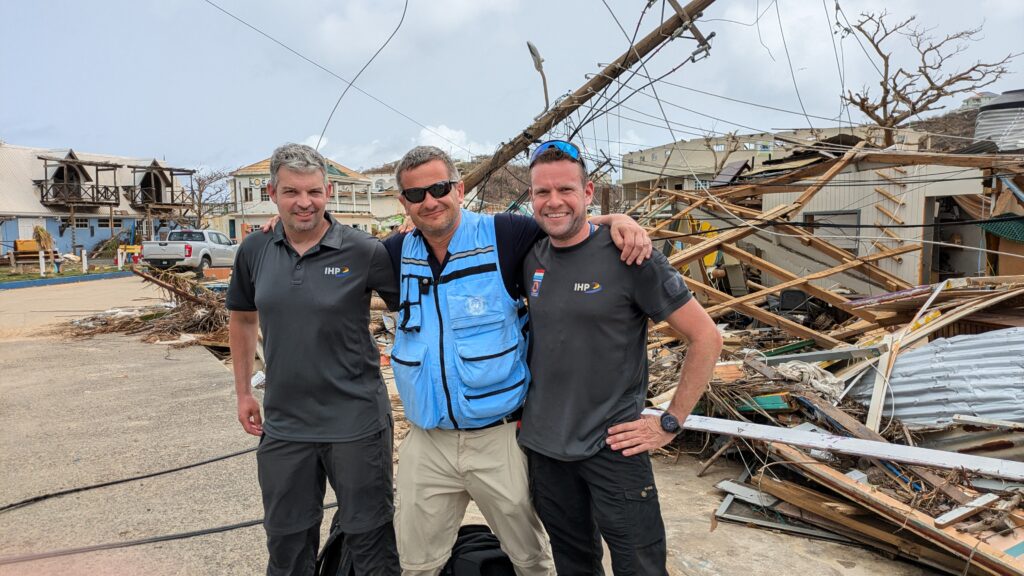
Yves Legil is one of Luxembourg’s national UNDAC (United Nationas Disaster Assessment and Coordination) Roster Members. As an UNDAC member, he can be deployed anywhere in the world to coordinate humanitarian assistance following a disaster. This was the case in July of this year, when, in the aftermath of Hurricane Beryl, he was deployed to Union Island in the Caribbean to coordinate relief operations carried out by various UN agencies.
We spoke with him to hear his impressions of the mission.
How did you prepare for this mission?
There was very little time to prepare. After receiving the green light from the United Nations Office for the Coordination of Humanitarian Affairs (OCHA) in Geneva, I was on a plane to the Caribbean in less than 12 hours. There is usually very limited time for preparation, which is why it is essential to always have your equipment ready. Since this disaster took place in a tropical environment, I packed additional items for this specific mission alongside my standard gear, including a tent, mosquito net, portable shower, solar panels, and emergency rations for the first few days.
What was the situation like when you arrived?
After a 12‑hour flight to the capital, Kingstown, I then had to travel another four hours by ferry to reach Union Island, where I was stationed.
The devastation caused by the hurricane was immediately visible. There was virtually nothing left standing. The few buildings that remained had lost their roofs. Ninety‑five percent of the island was destroyed. There was no electricity, no means of communication, no running water, and no access to food. In addition, residents burned their waste daily, which caused a strong smell of burnt materials across the island. It took some time to get used to that.
What exactly was your role there?
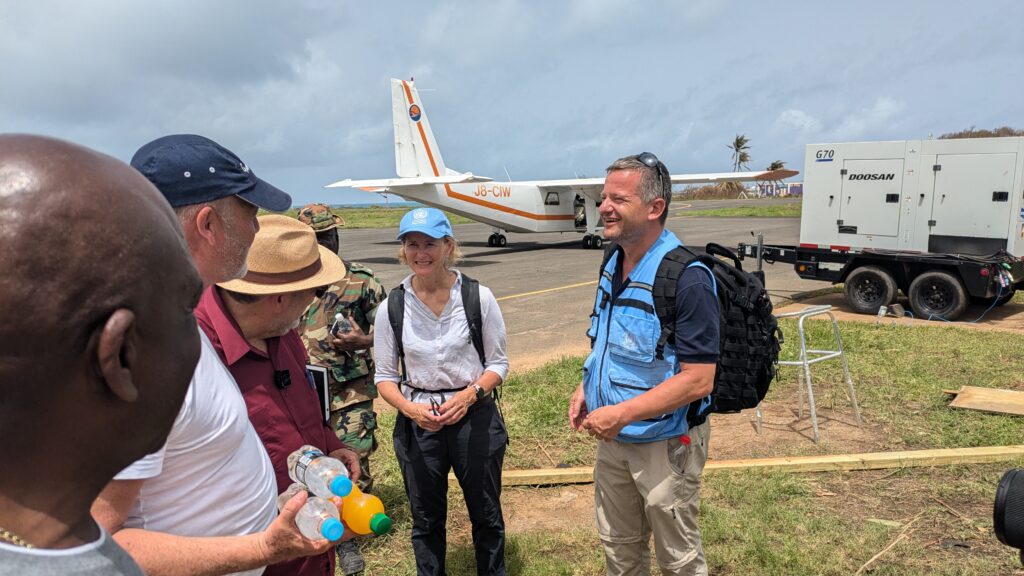
I served as the UNDAC Team Leader, and my primary responsibility was to coordinate the relief efforts on the island. I led a team of eight people: two other UNDAC members, one EU expert, and four members from other humanitarian organizations (such as IHP and Atlas Logistics). We established our base of operations in a small house that had, fortunately, suffered only minor damage.
At the beginning, we had to take the ferry to the capital every day, which meant a 10‑hour round trip. After a few days, we were able to conduct operations locally and manage relief efforts directly from the island. Together with the local authorities, we assessed what had been destroyed and what could still be used. We also jointly identified priorities and sought additional assistance, which was challenging due to the island’s distance from the capital. At first, the ferry ran daily; later, it only operated three times per week. It really felt like being cut off from the rest of the world.
How did you work with the local authorities?
At first, it was challenging. Support from the capital was limited, and the local authorities were overwhelmed by the scale of the disaster. However, we received a great deal of help from the local community, who actively participated in the relief efforts. This made a significant difference.
What was the most memorable moment of this mission for you?
Despite the extremely difficult living conditions, the local population demonstrated remarkable resilience. They even organized a small village celebration to boost community morale and encourage one another to stay strong. That moment truly stood out for me—it was a powerful reminder of human strength and the ability to preserve hope even in the most difficult circumstances.