The escalation of hostilities in the occupied Palestinian territory and Israel after 7 October 2023 led to catastrophic destruction across the Gaza Strip. Widespread civilian casualties—predominantly women and children—were accompanied by the collapse of critical infrastructure, health services, and communications systems. As airstrikes continued and mass displacement intensified, humanitarian organisations faced severe constraints in accessing Gaza, significantly complicating the delivery of life‑saving assistance. Entry of humanitarian supplies became largely dependent on controlled corridors through Egypt.
In this highly constrained environment, maintaining the continuity of essential health services—particularly vaccination and medical cold chains—emerged as an urgent priority.
Luxembourg’s Humanitarian Contribution under Humanitarian Air Bridge
In response to urgent requests from the World Health Organization (WHO) and the Palestinian Red Crescent Society (PRCS), Luxembourg mobilised a significant in‑kind contribution from its national humanitarian stockpile. The assistance was provided within the framework of the European Humanitarian Air Bridge (EUHAB), supporting both emergency health response and basic relief efforts for displaced populations in Gaza.
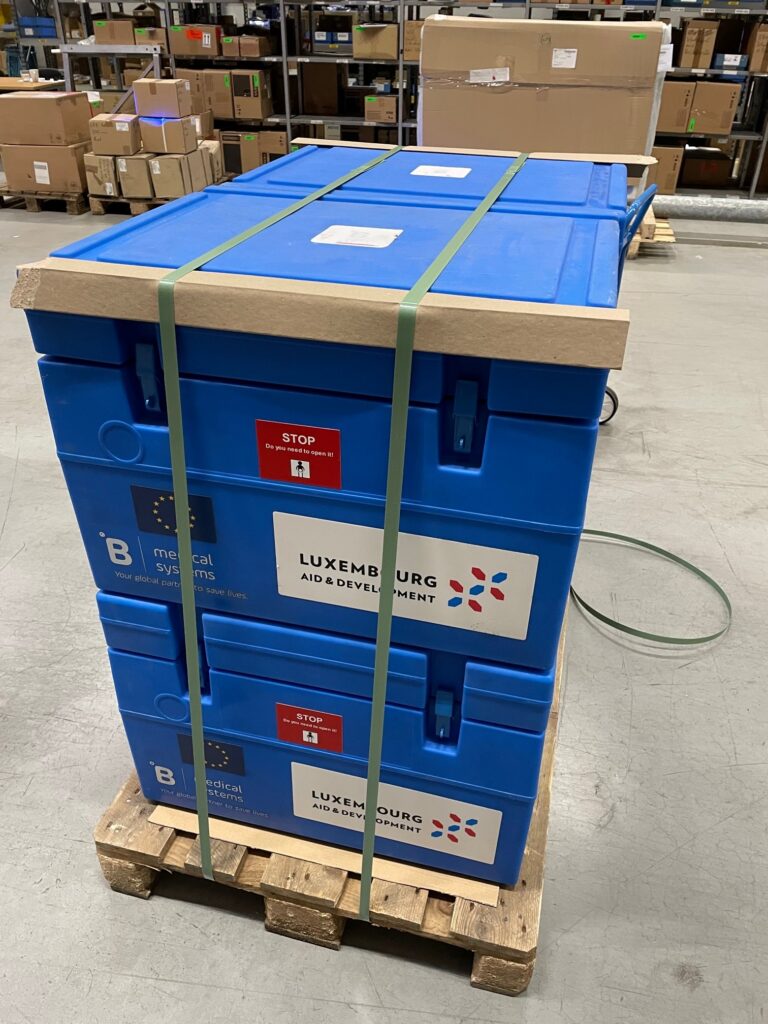
Luxembourg donated 17 vaccine refrigerators, including temperature‑monitored transport boxes, to support WHO’s emergency cold chain operations. These refrigerators were essential to preserving vaccines and other temperature‑sensitive medical products under highly unstable conditions, helping prevent further deterioration of Gaza’s already strained health system.
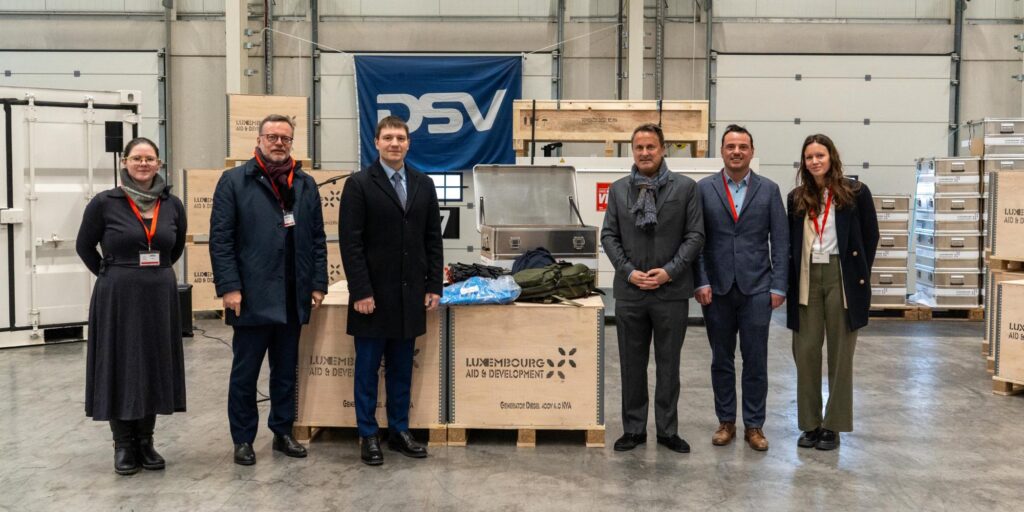
In addition to medical support, Luxembourg provided 1,800 non‑food relief items for PRCS use in Gaza. The donation included thermal blankets, sleeping bags, sleeping mats, and hygiene kits—critical items to support displaced families living in overcrowded shelters and temporary accommodation.
Compliance, Transport, and Delivery
All donated items were certified strictly for humanitarian use and accompanied by full customs documentation to ensure compliance with European and Egyptian regulations and to prevent any commercial resale. Given the restricted access to Gaza, Luxembourg coordinated closely with the Emergency Response Coordination Centre (ERCC) and EU partners to arrange transport via EU‑chartered humanitarian flights to Egypt.
The shipment transited through the Al Arish humanitarian corridor, a key logistical entry point for aid destined for Gaza. Upon arrival, the supplies were handed over for onward delivery through WHO and PRCS distribution systems operating inside Gaza, ensuring rapid integration into existing humanitarian response structures.