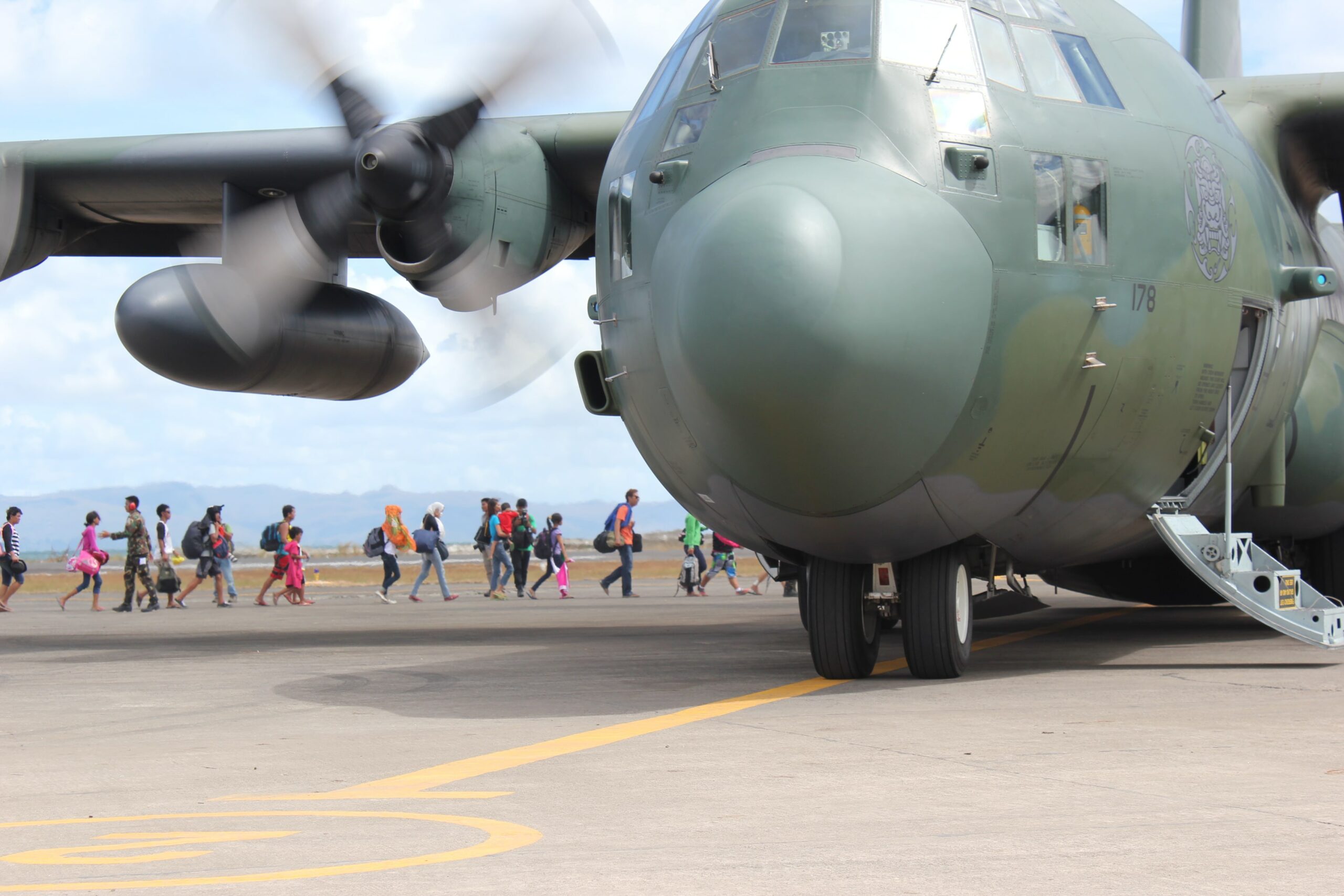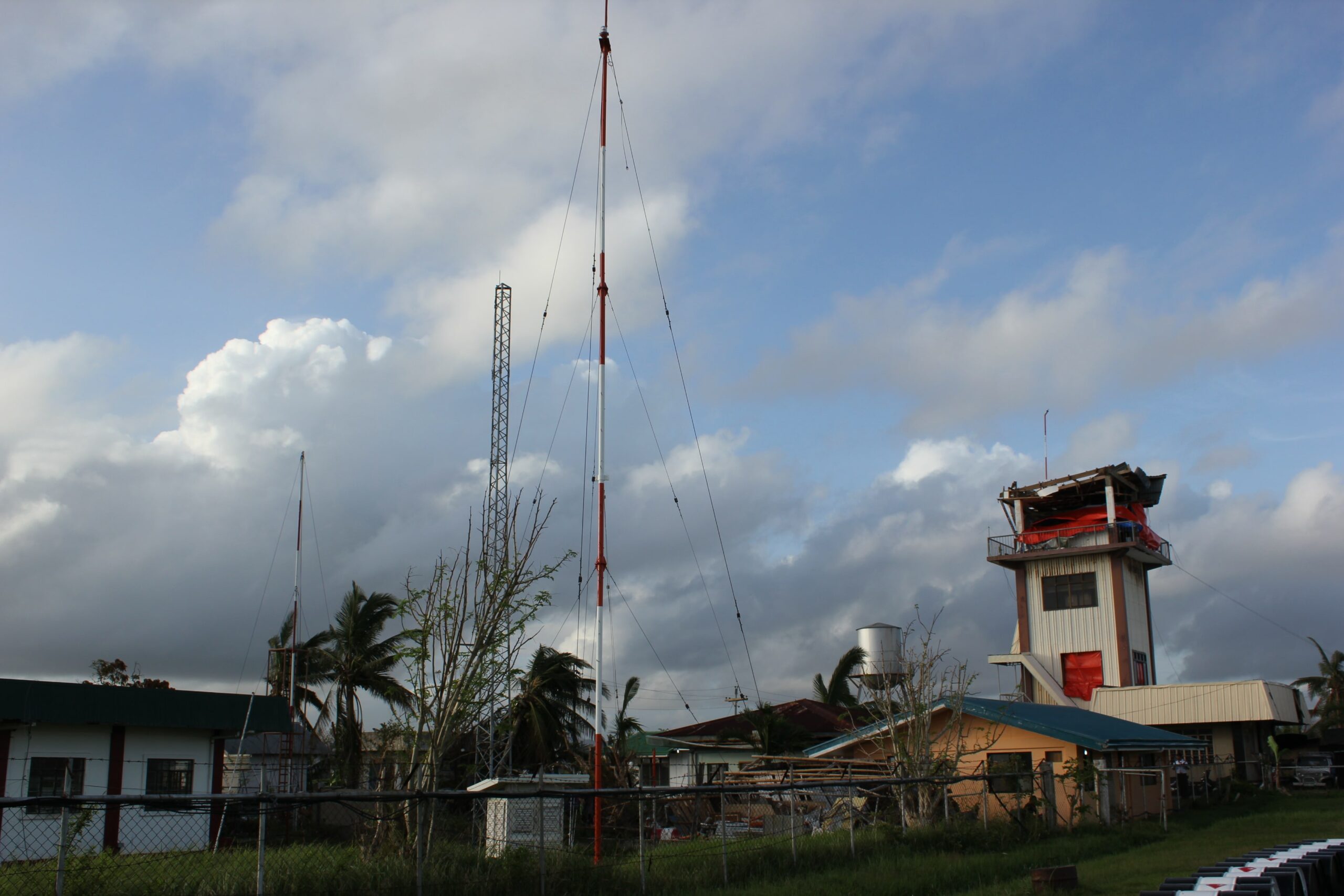
In early November 2013, Typhoon Haiyan (locally known as Yolanda) struck the central Philippines, becoming one of the strongest tropical cyclones ever recorded at landfall. With sustained winds exceeding 300 km/h and a massive storm surge, Haiyan devastated large parts of Eastern Visayas, particularly Tacloban City, leaving more than 6,000 people dead and millions displaced. Critical infrastructure—including power, roads, and telecommunications—was almost entirely destroyed, creating a severe communications vacuum in the first days of the response.
To address this gap, emergency.lu was rapidly deployed as part of the international humanitarian response.
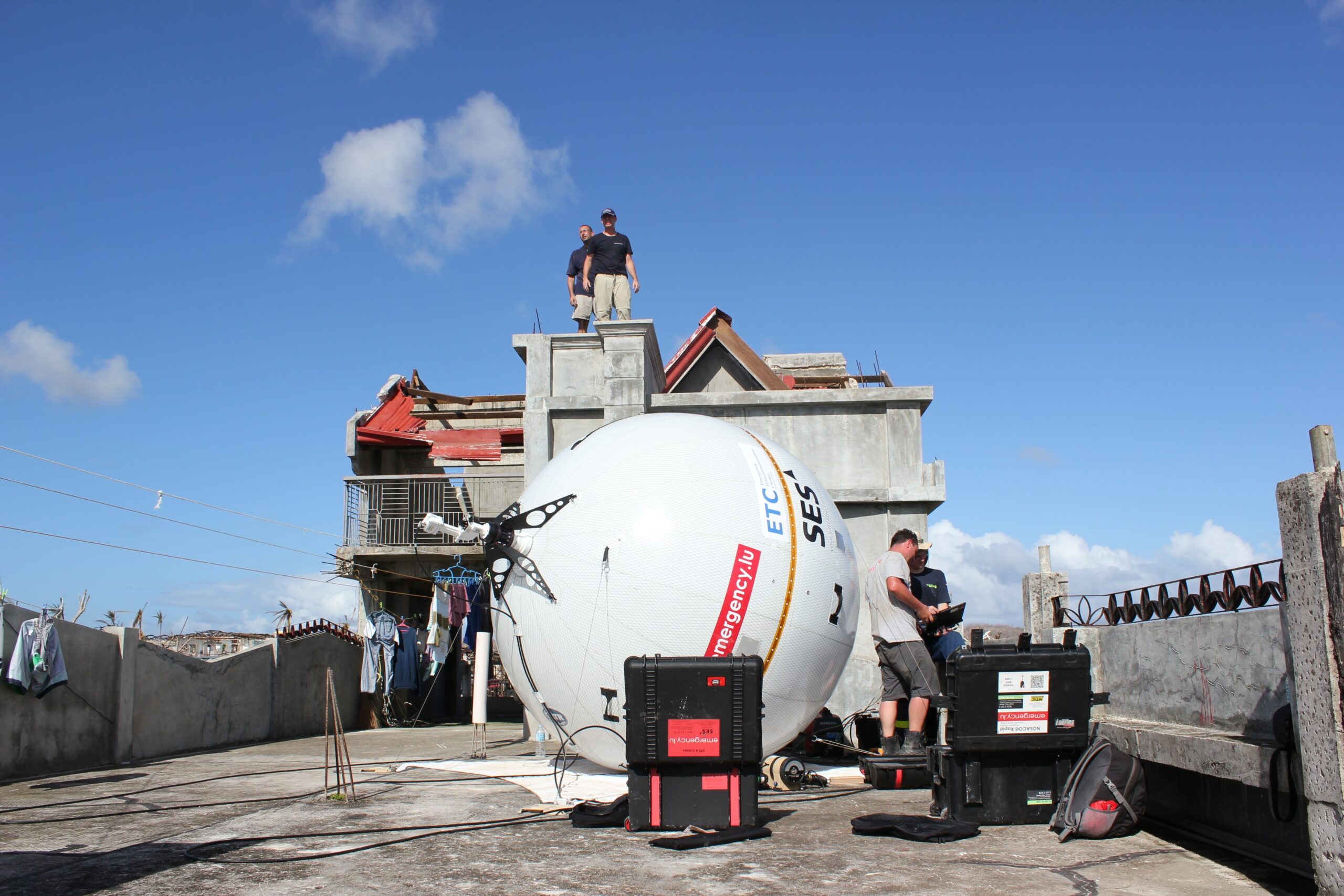
On 10 November 2013, two emergency.lu rapid deployment kits, accompanied by four VSAT experts from Luxembourg Civil Protection, were deployed to the Philippines under an International Humanitarian Partnership (IHP) support mission for UNDAC/OCHA. In parallel, one additional rapid deployment kit and one regular emergency.lu kit were dispatched from the Humanitarian Response Depot (HRD) in Dubai to support the Emergency Telecommunications Cluster (ETC) operations in-country.
Tacloban: Restoring connectivity at the epicenter
The first rapid deployment kit was installed on the roof of Tacloban City Hall on 12 November 2013, at the heart of the area most impacted by Haiyan. Integrated into the ETC Response Solution, the system became fully operational by 15 November. To extend access, it was complemented by a wireless access control system provided by Ericsson Response, enabling controlled and equitable connectivity for humanitarian use.
Within just two weeks, more than 900 users were registered on the emergency.lu network in Tacloban. These included:
- Local and national government authorities
- UN agencies
- International and local NGOs
The connectivity restored by emergency.lu played a critical role in coordination, needs assessments, logistics tracking, and information sharing at a time when virtually all commercial networks were still down.
Ormoc: Short‑term support, rapid handover
As part of the same IHP mission in support of OCHA/UNDAC, a second rapid deployment kit was installed at Ormoc City Hall. The system provided free internet and voice services to the humanitarian community operating in and around Ormoc, supporting coordination and field reporting.
Once the local internet service provider restored connectivity, the emergency.lu kit was dismantled after four days of operations, demonstrating the system’s flexibility and ability to bridge gaps until local capacity recovers.
Guiuan and Estancia: Supporting field operations
Further south in Guiuan, a severely affected coastal town close to Haiyan’s landfall point, two additional emergency.lu kits—one rapid deployment kit and one regular kit—were installed. These systems provided reliable connectivity to approximately 800 humanitarian workers based at the IHP base camp, as well as to local government authorities, supporting field coordination in remote and heavily damaged areas.
An additional rapid deployment kit was also installed in Estancia, extending emergency connectivity to another hard‑hit location where communications infrastructure had been wiped out.
A critical enabler in one of the world’s worst storms
The emergency.lu deployments during Typhoon Haiyan underscored the critical role of satellite‑based emergency communications in large‑scale natural disasters. By restoring internet and voice services within days of impact, emergency.lu enabled humanitarian actors to operate as a coordinated system—even in environments where physical infrastructure had been almost completely erased.
Haiyan reinforced a lesson first learned in Haiti in 2010 and proven again in the Philippines in 2013: without communications, there is no effective response—and with the right connectivity, lives can still be saved amid devastation.