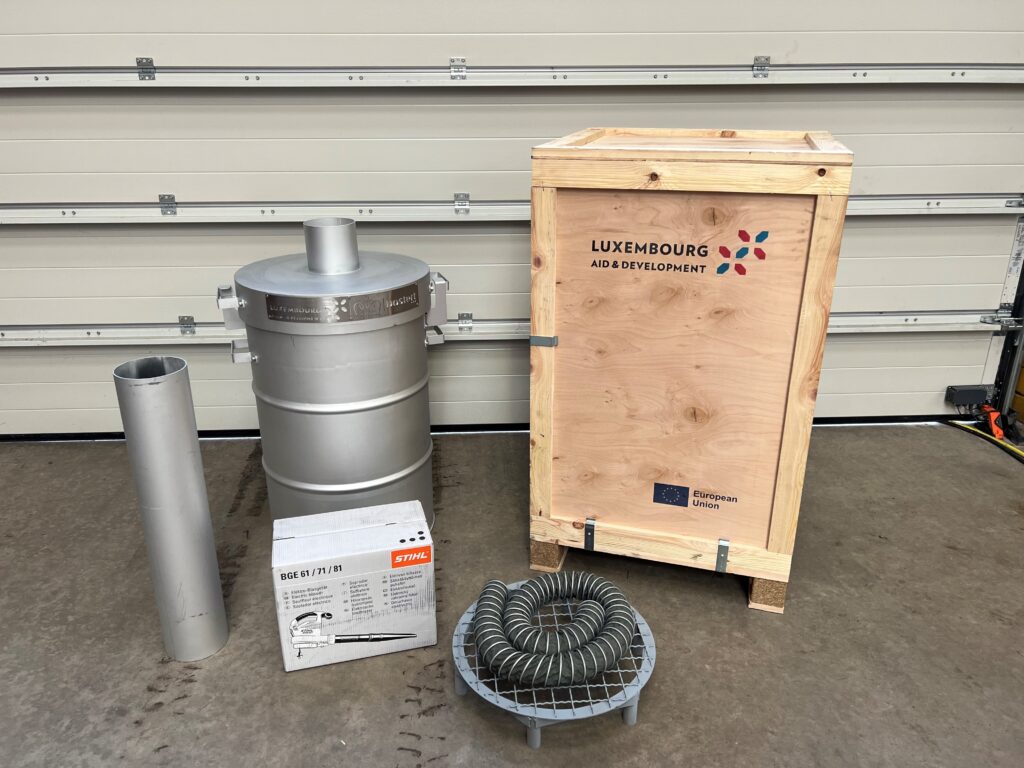
In response to escalating humanitarian needs linked to the ongoing crisis in Sudan, three wasteburners have been donated to UNHCR in Farchana to support the safe management of non‑recyclable waste in refugee camps. Thousands of people have fled across the border to escape conflict and instability, placing immense pressure on already limited infrastructure. In such densely populated settings, effective waste management is essential to protect public health, environmental safety, and dignified living conditions.
A last‑resort solution to prevent health risks
The wasteburner is designed to be used strictly as a last resort, when waste cannot be avoided, reused, or recycled. Its purpose is not large‑scale incineration, but rather the safe and controlled disposal of hazardous and non‑recyclable waste that would otherwise accumulate in and around camps.
Unmanaged waste poses serious risks in refugee settings: it can attract pests, contaminate soil and water, generate toxic smoke from open burning, and contribute to the spread of disease. By eliminating this waste in a clean, controlled manner, the wasteburner helps maintain sanitary conditions, reduces health hazards, and improves overall camp safety.
Clean burning technology for remote environments
Specifically developed for remote locations without formal waste disposal systems, the WasteBurner enables waste to be burned cleanly and efficiently, without prolonged smouldering or the release of excessive smoke and odours. A built‑in fan injects air into the drum, creating a cyclonic airflow that significantly increases combustion efficiency. This airflow generates high temperatures, ensuring rapid and complete burning while minimizing emissions.
The result is a system that:
- Prevents long‑lasting, uncontrolled fires
- Produces no visible smoke and minimal smell
- Reduces environmental and health impacts compared to open burning
Field‑tested and continuously improved
The wasteburner is the outcome of years of operational experience and continuous improvement by the emergency.lu team. Designed to function reliably under harsh field conditions, it has been incrementally refined based on direct feedback from deployments, ensuring practicality, durability, and ease of use in humanitarian contexts.
Designed and built in Luxembourg
Fully designed and assembled in Luxembourg, the wasteburner reflects national expertise in emergency response and sustainable humanitarian engineering. Its deployment to Farchana demonstrates how technical innovation—when rooted in real‑world humanitarian needs—can make a tangible difference in protecting health, dignity, and the environment for displaced populations living in some of the world’s most challenging conditions.