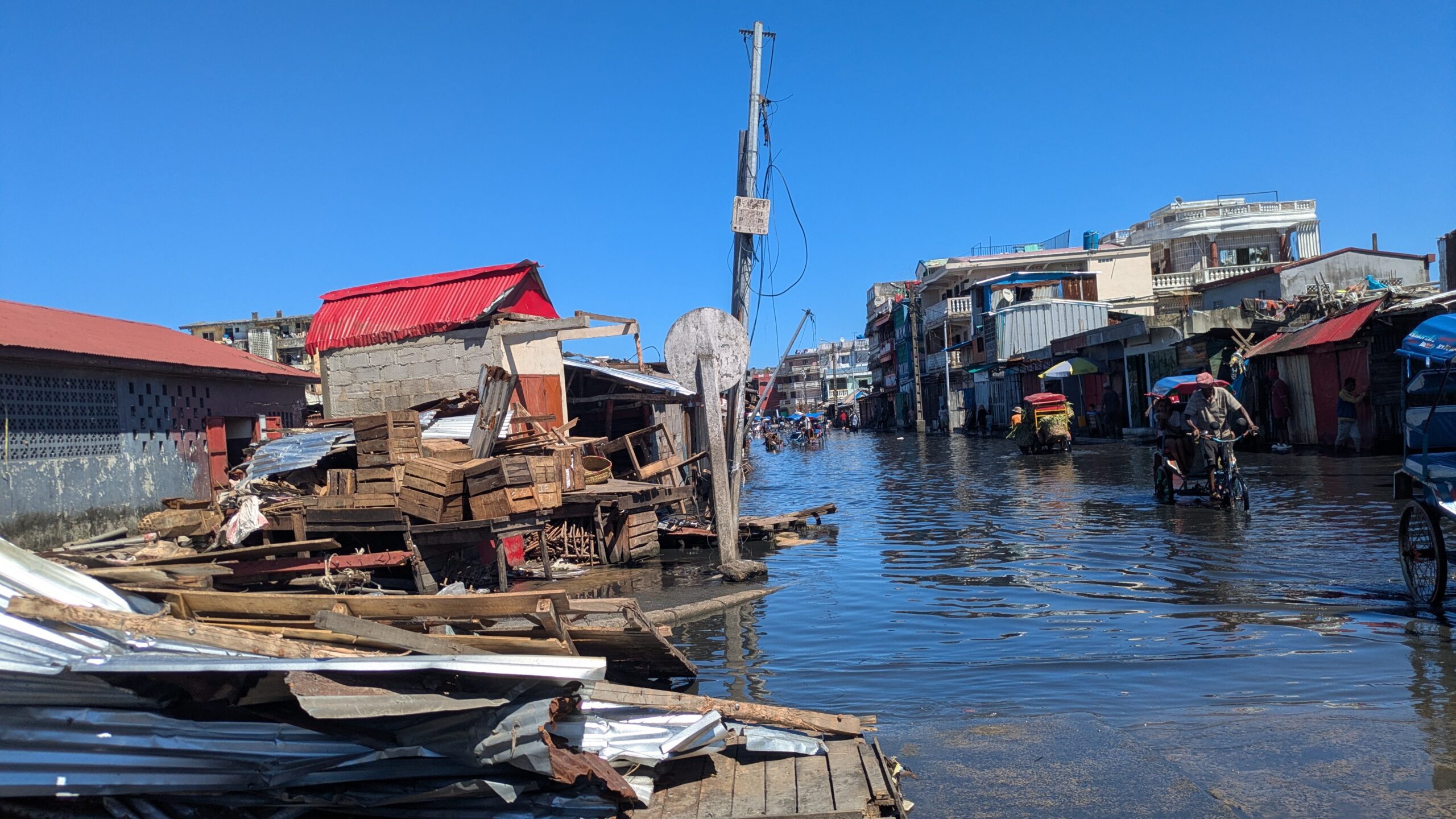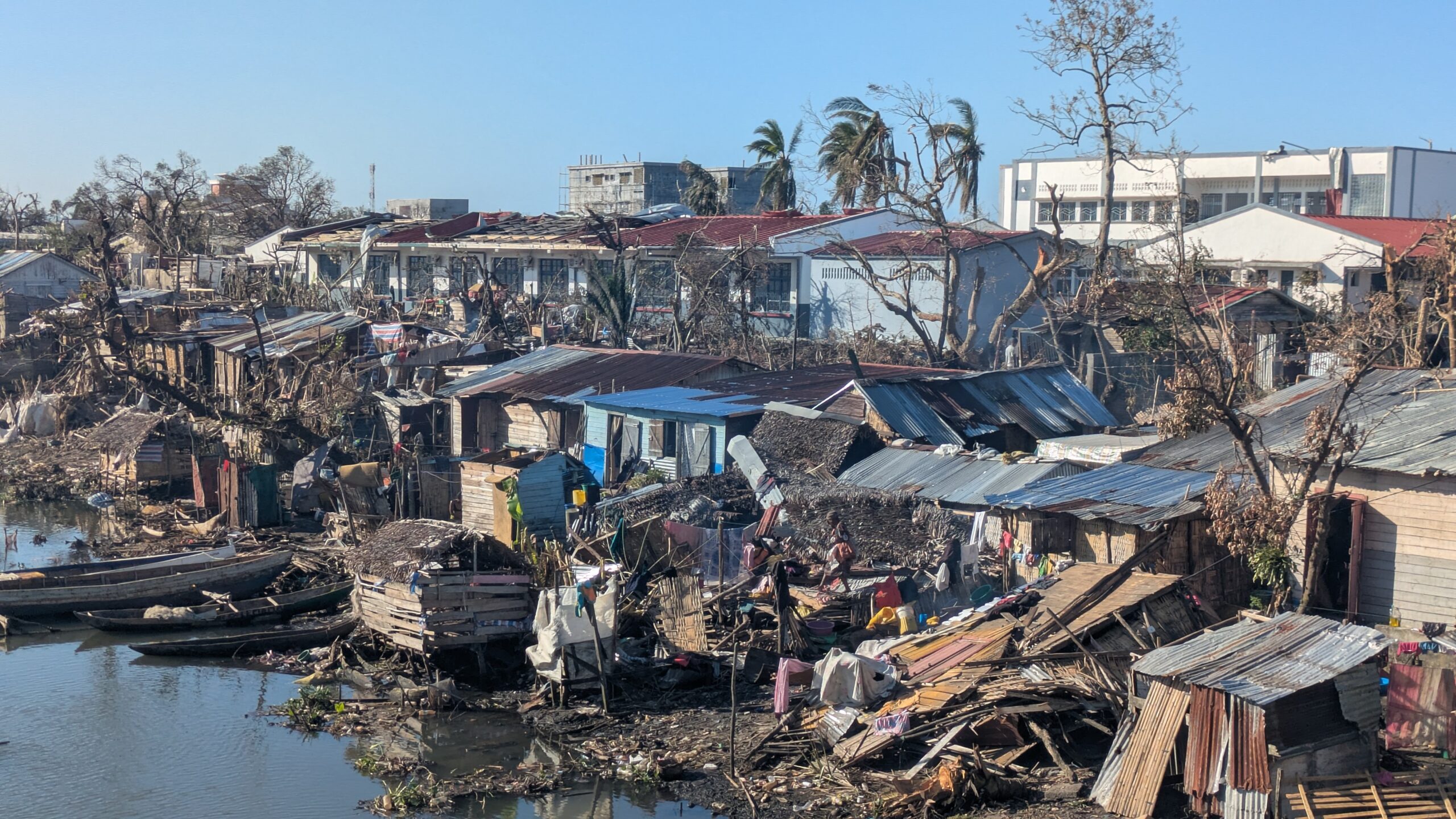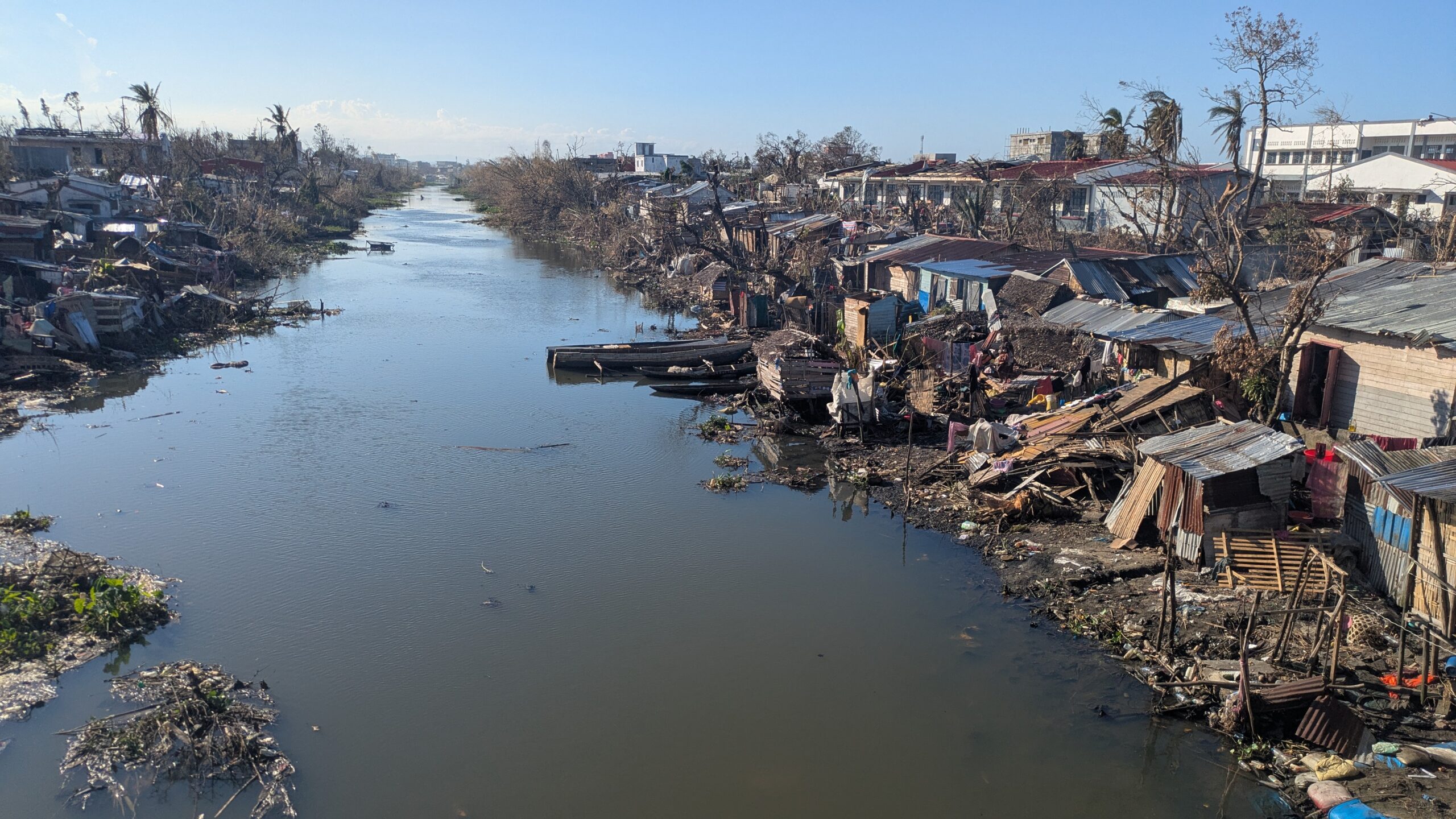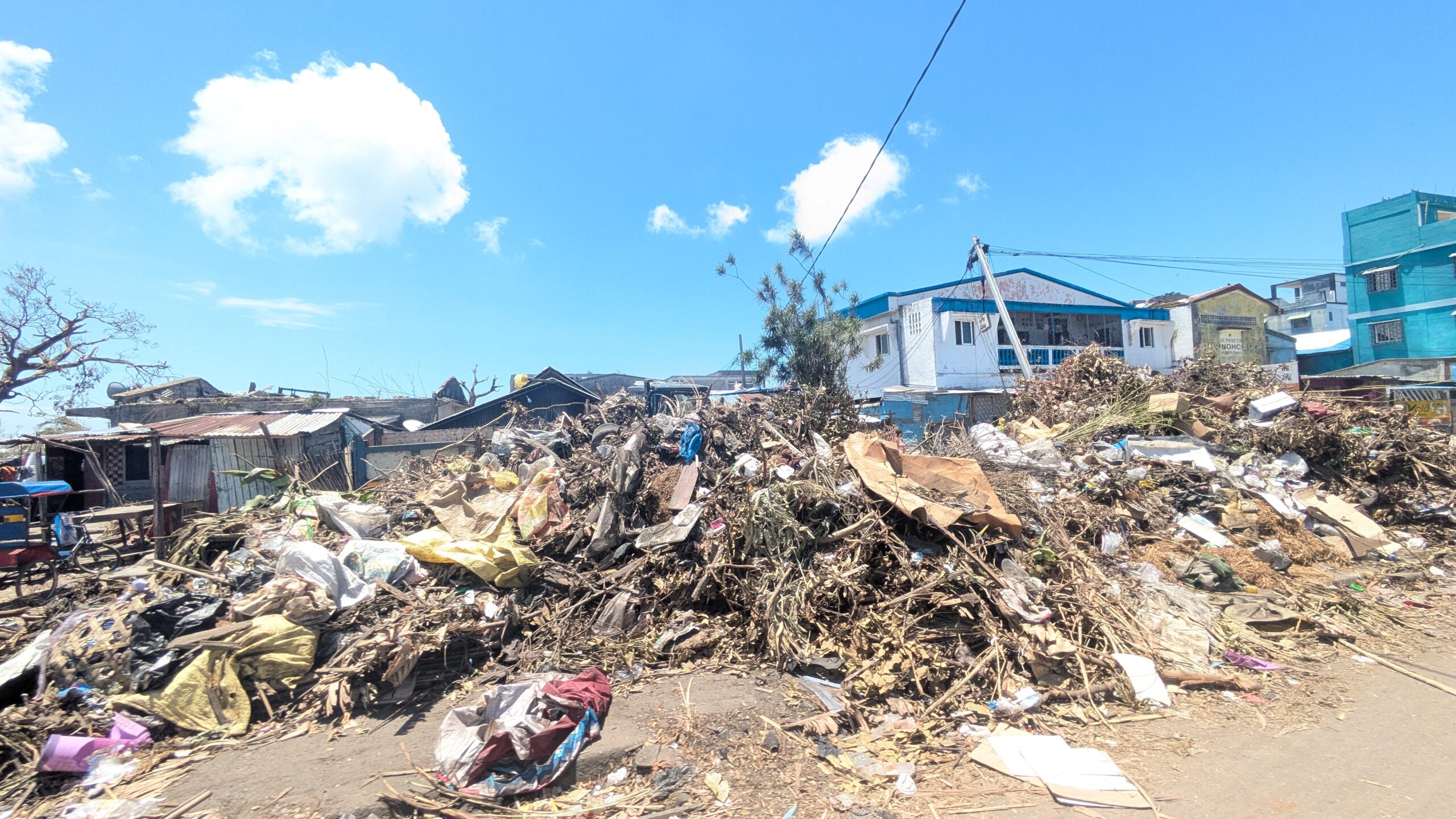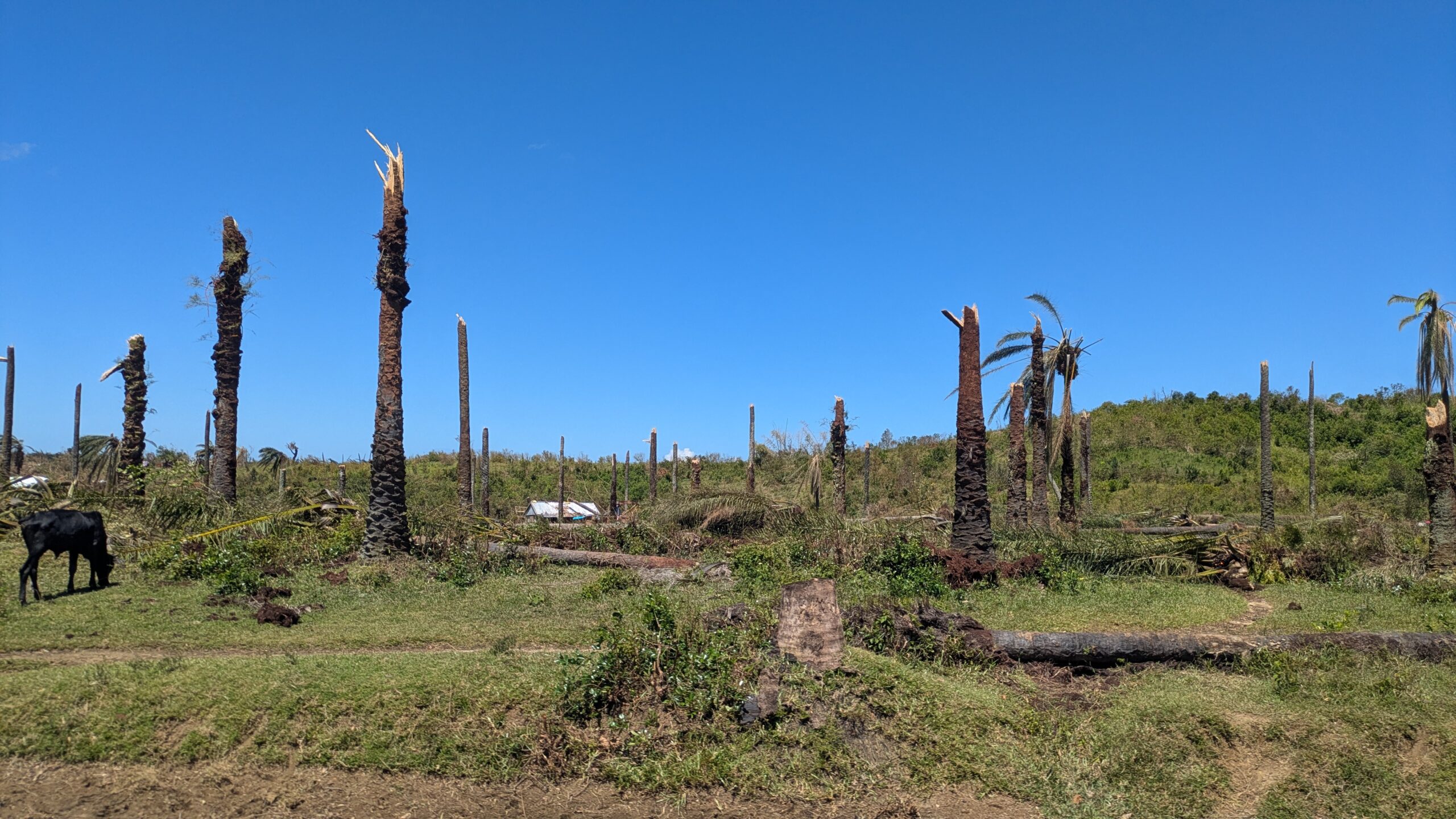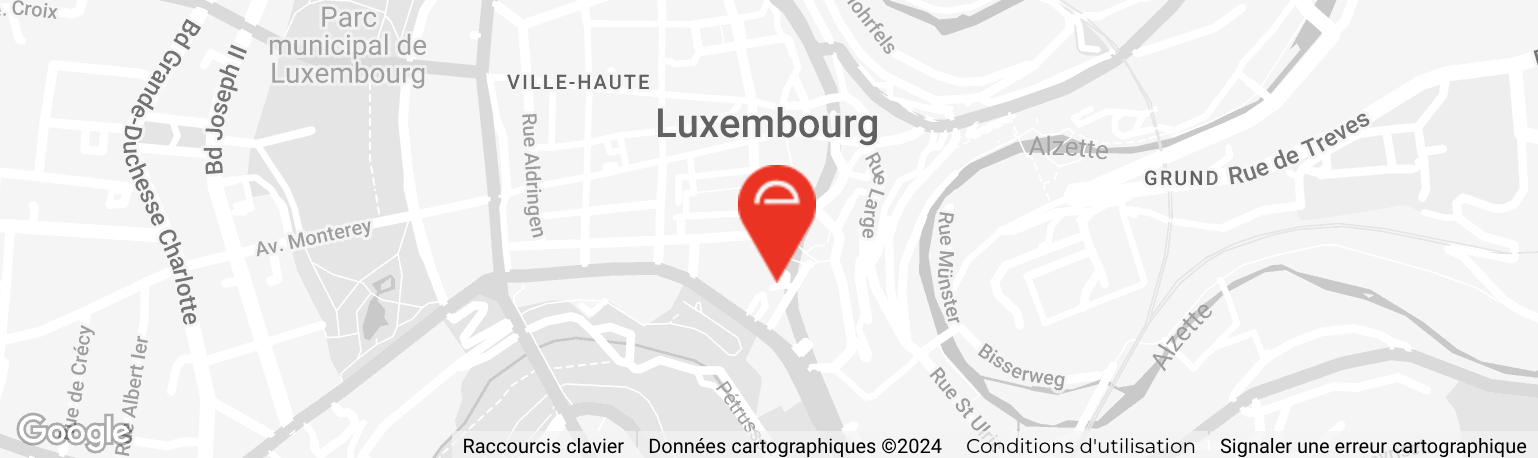
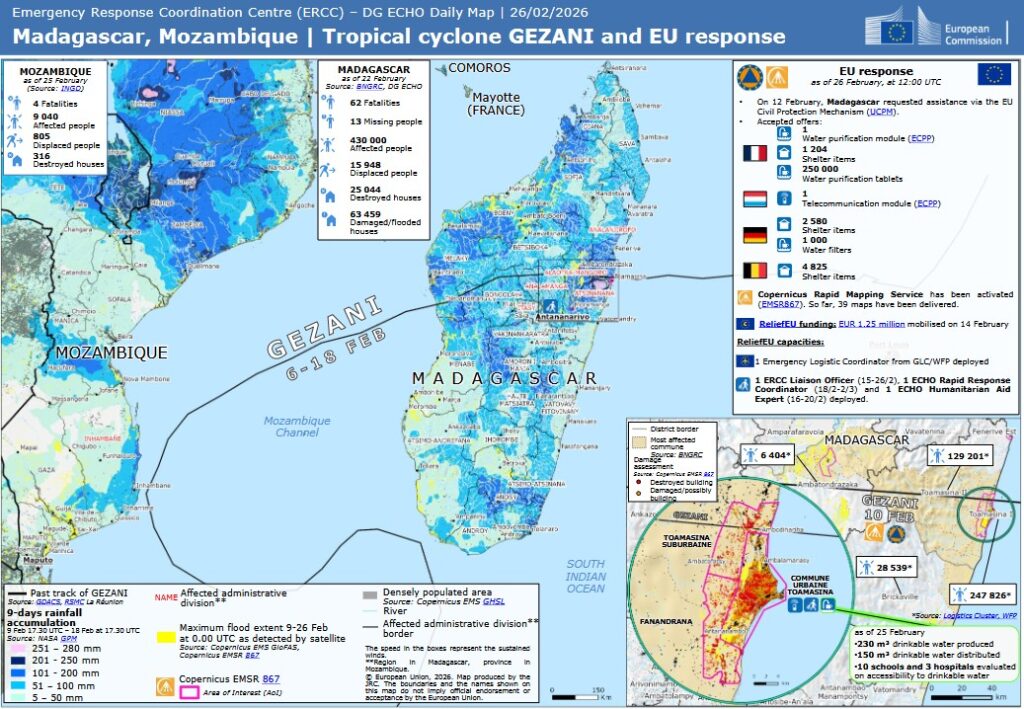
On 10 February 2026, Cyclone Gezani-26 intensified and made landfall near Toamasina on Madagascar’s east coast, unleashing devastating winds and torrential rainfall that triggered destructive flooding and widespread wind damage. Early reports from OCHA and ECHO indicated dozens of fatalities, thousands of injured and displaced individuals, and extensive destruction of housing and critical infrastructure.
Coastal and low-lying regions bore the brunt of the storm, with additional risks projected for southern Mozambique. The humanitarian crisis was immediate, as communities found themselves cut off from communication and essential services, deepening the suffering of those already in distress.
In response to the GDACS Red Alert and a formal request from the government, channeled through the Union Civil Protection Mechanism (UCPM), emergency.lu swiftly mobilized its resources to address the crisis.
The mission focused on restoring and reinforcing emergency telecommunications in the hardest-hit areas, ensuring that humanitarian workers and local authorities could coordinate relief efforts without interruption.
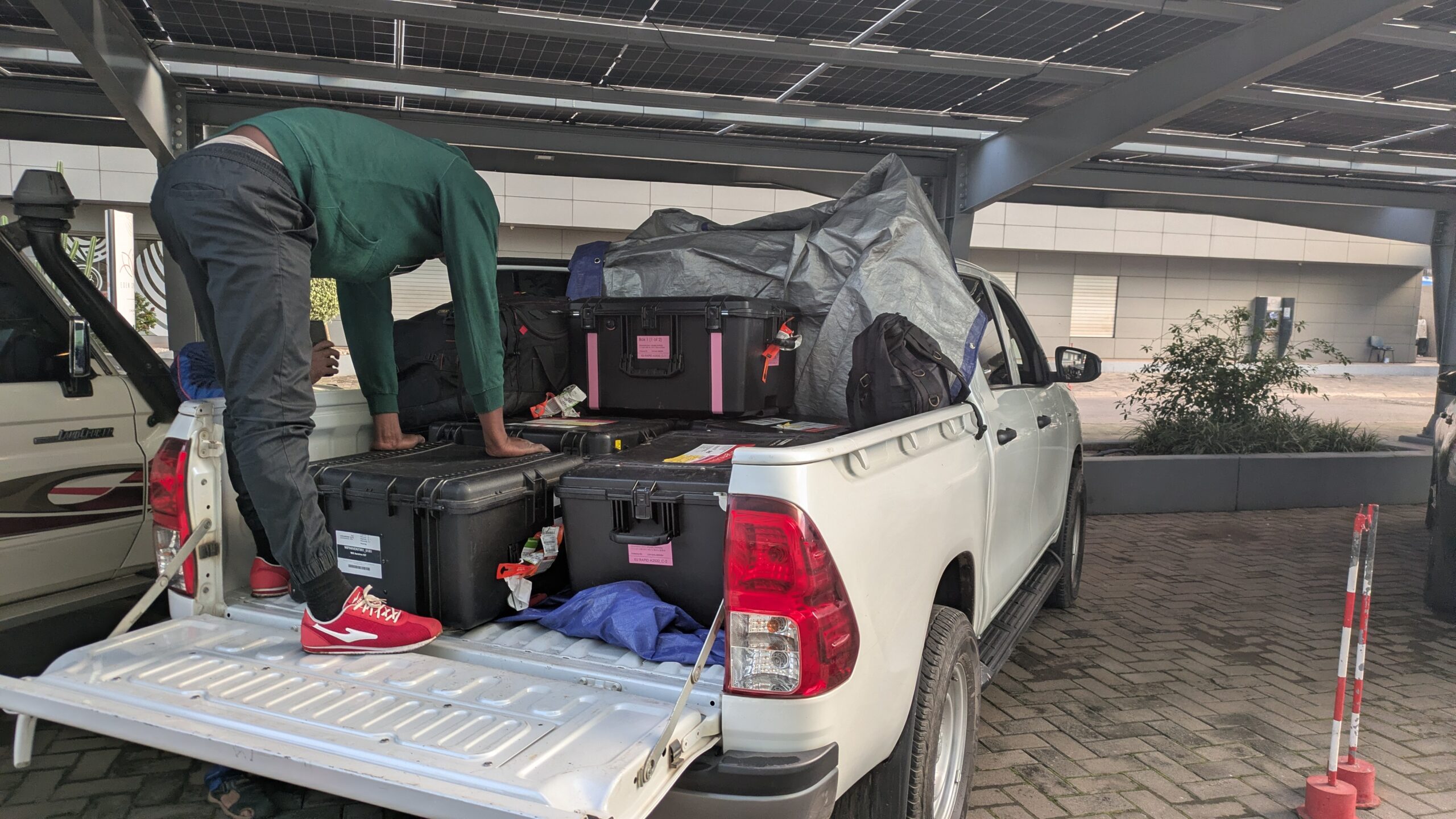
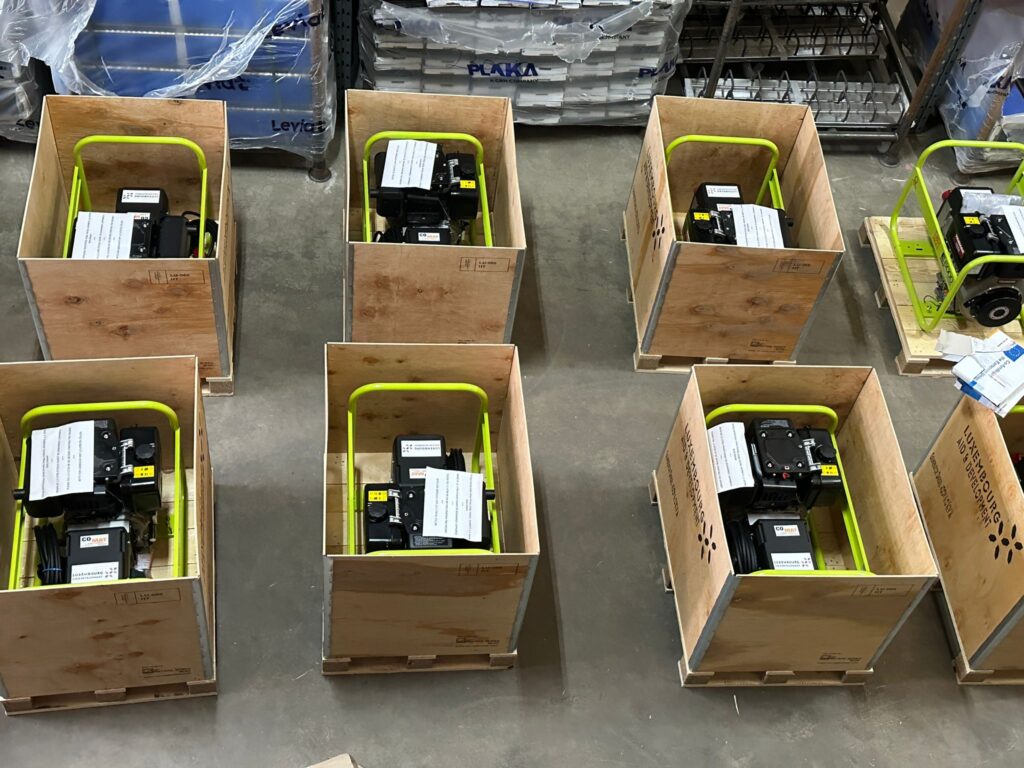
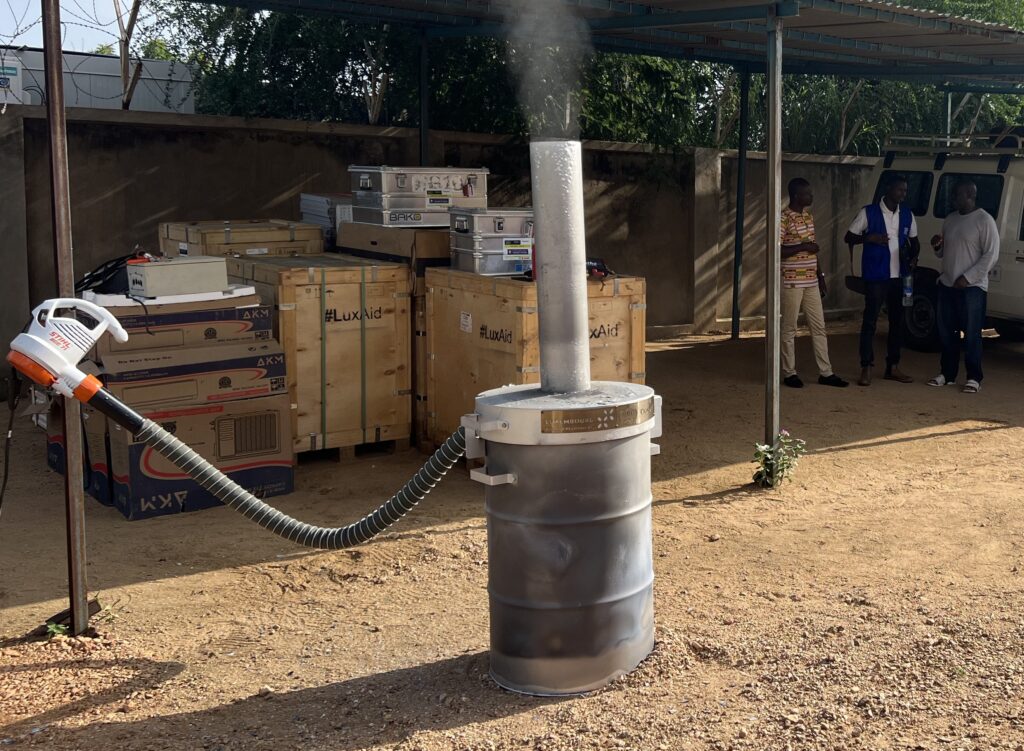
Emergency.lu deployed one of its highly mobile rapid response satellite communication terminal, along with essential network equipment, and dispatched two expert ICT and telecommunications specialists to establish and maintain connectivity in Toamasina, the epicenter of the disaster. Their efforts successfully restored critical communication links, providing connectivity to humanitarian workers and local civil protection teams and enabling real-time coordination and data sharing.
Human and Operational Ripple Effects
The effects of emergency.lu’s intervention went far beyond the technical act of restoring links and bandwidth. Re‑establishing communications triggered a chain reaction of secondary humanitarian impacts that directly improved how people survived and recovered in the aftermath of the cyclone.
With connectivity restored, life‑saving assistance could move at speed. Humanitarian organizations were once again able to coordinate food distributions, medical evacuations, shelter delivery, and protection services, avoiding delays, overlap, and critical gaps that typically arise during communications blackouts. The return of connectivity transformed isolated response efforts into a coherent, synchronized operation.
Pre-arranged Civil Protection Pool Capacity
The modules deployed to Toamasina form part of Luxembourg’s officially registered Civil Protection Pool capacity. This means they are pre‑arranged with DG ECHO, fully interoperable with EU coordination mechanisms, and maintained at a high state of operational readiness. Personnel, equipment, procedures, and deployment timelines are agreed in advance, significantly reducing response time during sudden‑onset emergencies.
Luxembourg’s modules are designed to be deployable globally in under 24 hours upon request. Once the affected country activates the EU Civil Protection Mechanism and assistance is offered through the ERCC (Emergency Response Coordination Centre), the modules can be rapidly mobilized, transported, and integrated into the international response. This speed is critical in the first hours after a disaster, when needs are highest and delays cost lives.
Read more about the European Civil Protection Pool here.